

Your Attractive Heading
About Formula Student
What is Formula Student?
Formula Student is a global engineering design competition, where students from universities around the world develop and build single-seated racing cars.
However, winning is not all about building the fastest car. Victory belongs to the team which excels in all aspects: design, performance, cost planning, and business strategy. Teams are judged by experts from motorsport, automotive, and supplier industries, who assess both the technical quality of the car and the team’s business approach.
In Europe, the regulations for Formula Student competitions are set by the organizers of Formula Student Germany (FSG), making FSG the central reference point for rules across many events.
Why Students Build Formula-Style Cars?
Formula Student challenges students to go beyond their university coursework and apply their knowledge to a real-world project. It combines teamwork, time and project management, engineering, manufacturing, and business thinking.
By taking part, students gain valuable experiences that are beneficial to them as future engineers. They also gain more exposure to the automotive industry, since companies often use Formula Student as a platform to meet and recruit new talents.
How Does Businesses and Partners Benefit?
Formula Student offers companies in the motorsport, automotive, and supplier industries a unique way to evaluate the skills of young engineers. By sponsoring or supporting teams, they can build early connections with highly motivated students. Involvement in judging, mentoring, or funding also provides valuable insights into the next generation of engineering talent.
Disciplines
There are a lot of Formula Student competition events globally each year. While they all have their own specialties that make them unique, they all share the same core disciplines a.k.a. events in which teams must compete. Those are separated into two major categories: dynamic and static.
Dynamic Events
Dynamic events test the performance of the cars on track. Each event would evaluate the vehicle’s different physical features such as acceleration, skid pad, autocross, endurance, driverless trackdrive and efficiency.
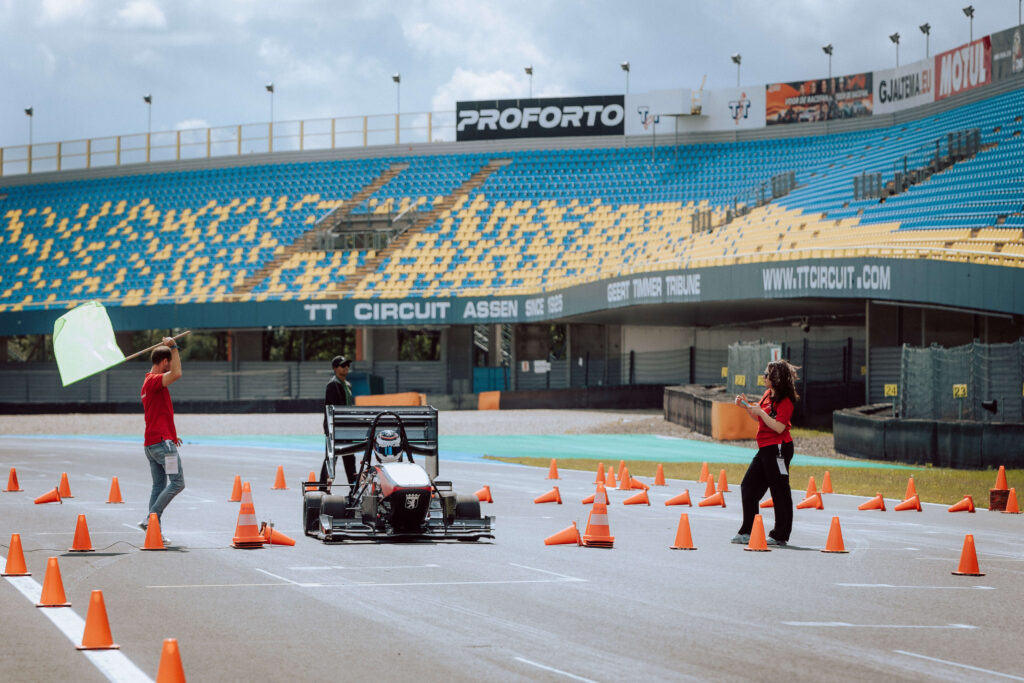
The car’s ability to accelerate is tested on a straight 75-metre stretch. Besides traction, the powertrain design plays a major role, whether in aiming for maximum output or strong torque delivery. The fastest cars complete the run in under four seconds and surpass 100 km/h before the finish line.
Maximum scores: 50 (with driver) and 75 (driverless).
In this event, each car will have to navigate a figure-eight circuit marked by cones, completing two laps each circle, in which the 2nd lap would be recorded. The result could be comparable to the highest possible lateral acceleration. Many designs rely on aerodynamics to increase contact pressure, hence, raise lateral speed. Hitting cones would lead to time penalty.
Maximum scores: 50 (with driver) and 75 (driverless).
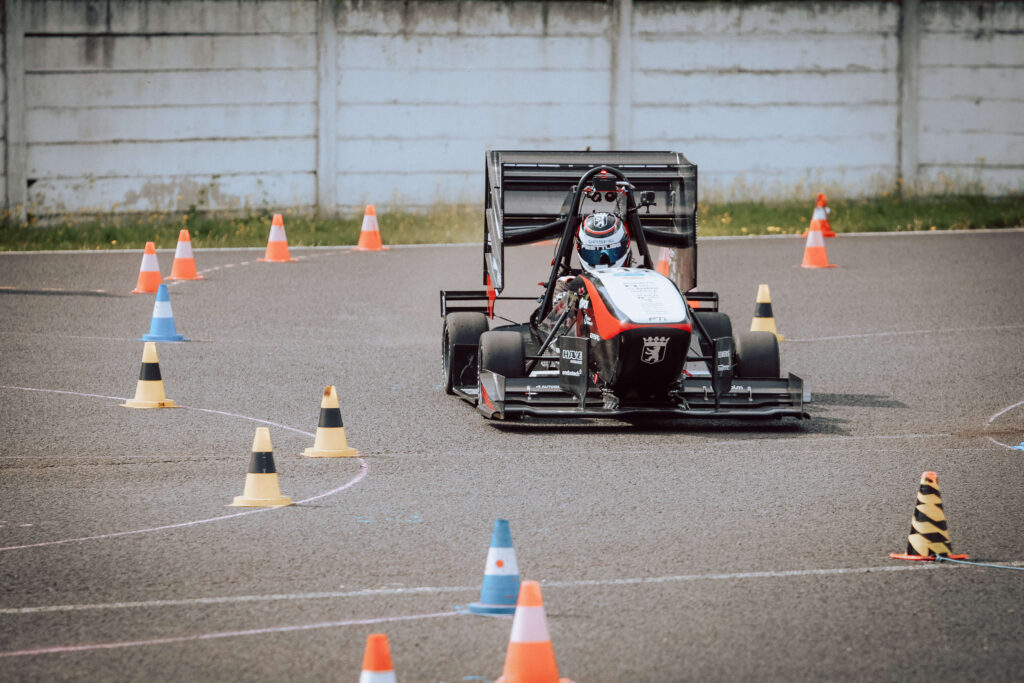
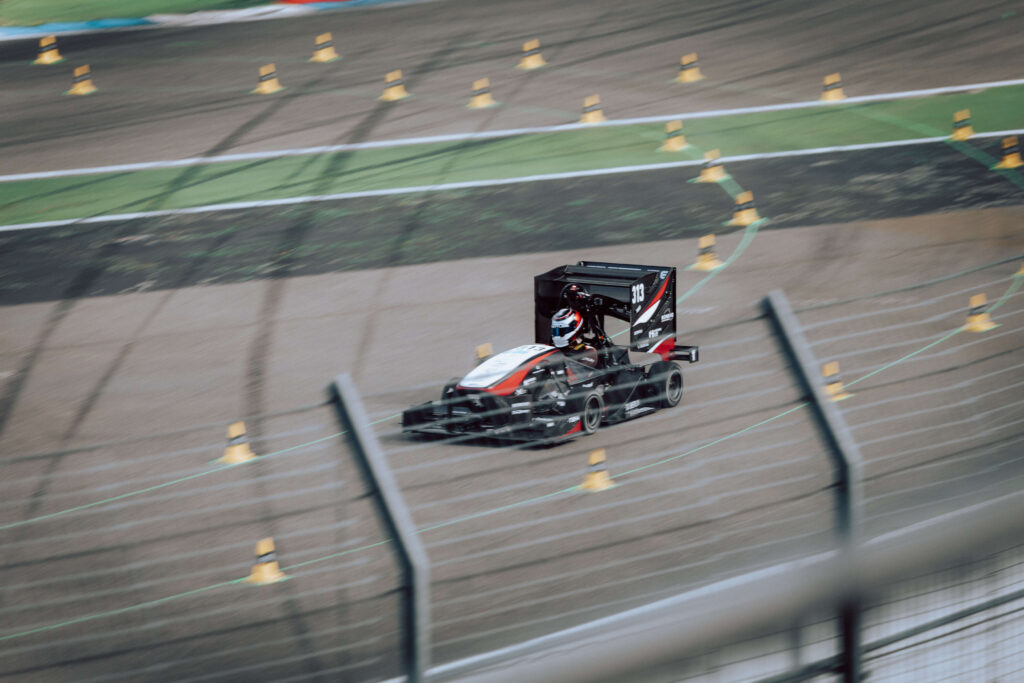
In this event, cars with drivers run a one-kilometre track, while driverless entries cover about half the distance. The course combines straights, bends, and tight chicanes. A strong lap reflects quick acceleration, precise steering, and effective braking. As in other events, striking cones leads to added time as a punishment. Results in this event determine starting order for endurance.
Maximum scores: 100 (with driver) and 100 (driverless).
As the most important challenge, endurance makes up the most points. Cars must demonstrate their durability over a 22-kilometre course. Speed, agility, energy usage, and reliability are all judged. Drivers will need to have a good control, as several cars share the circuit at once. Only one attempt is allowed, with a mandatory driver swap halfway.
Maximum scores: 250 (with driver).
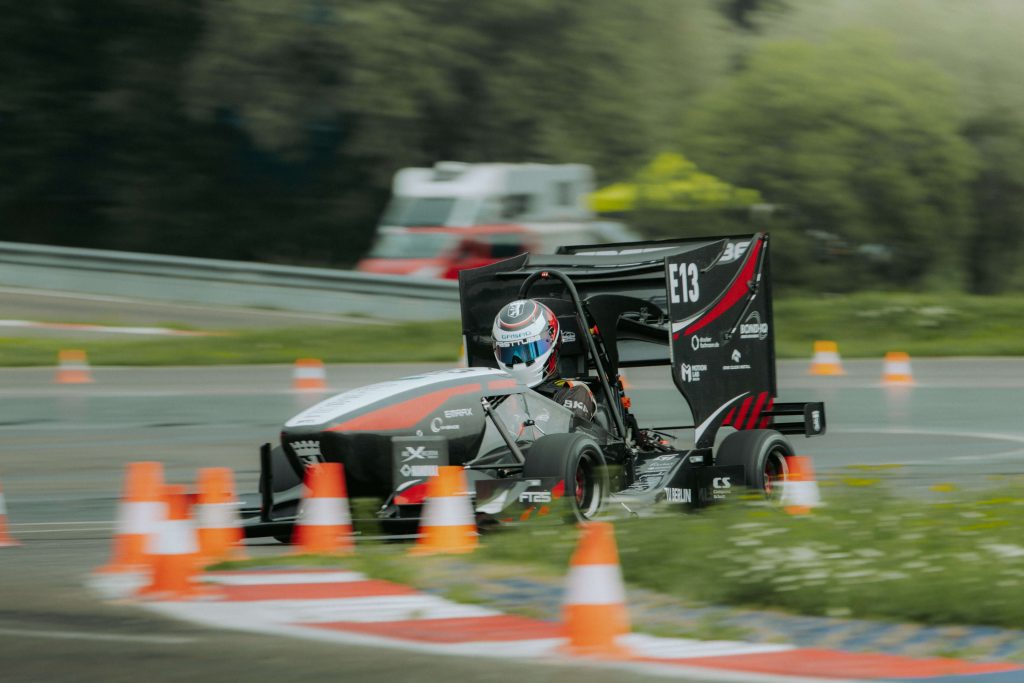
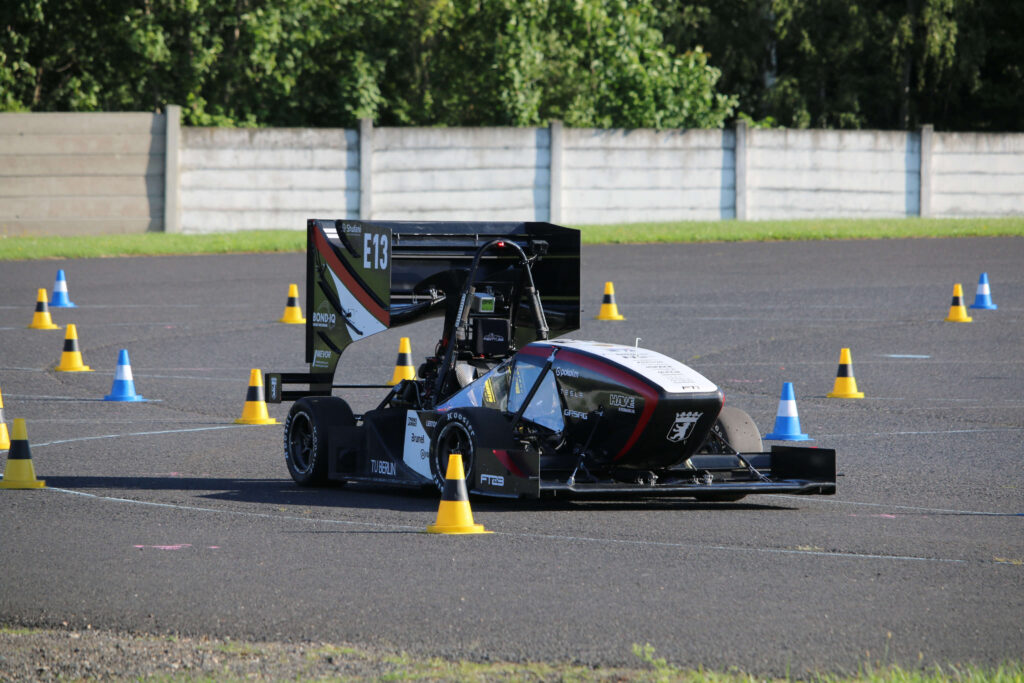
Alongside engineering design, track drive is the key event for driverless cars. Vehicles must cover ten laps without drivers involved, proving stability and reliability under long-term race conditions. The full distance must be done in a single attempt, and any cones knocked down will not be replaced.
Maximum scores: 200 (driverless).
During the endurance event, the energy consumption of each car is carefully measured. What counts is not the amount of fuel or electricity used, but rather the usage relative to speed. This prevents teams from driving overly slowly to gain advantage.
Maximum scores: 75.

Static Events
Static events focus on the teams’ ability to handle real world hurdles of finances, business strategy and good engineering practice.
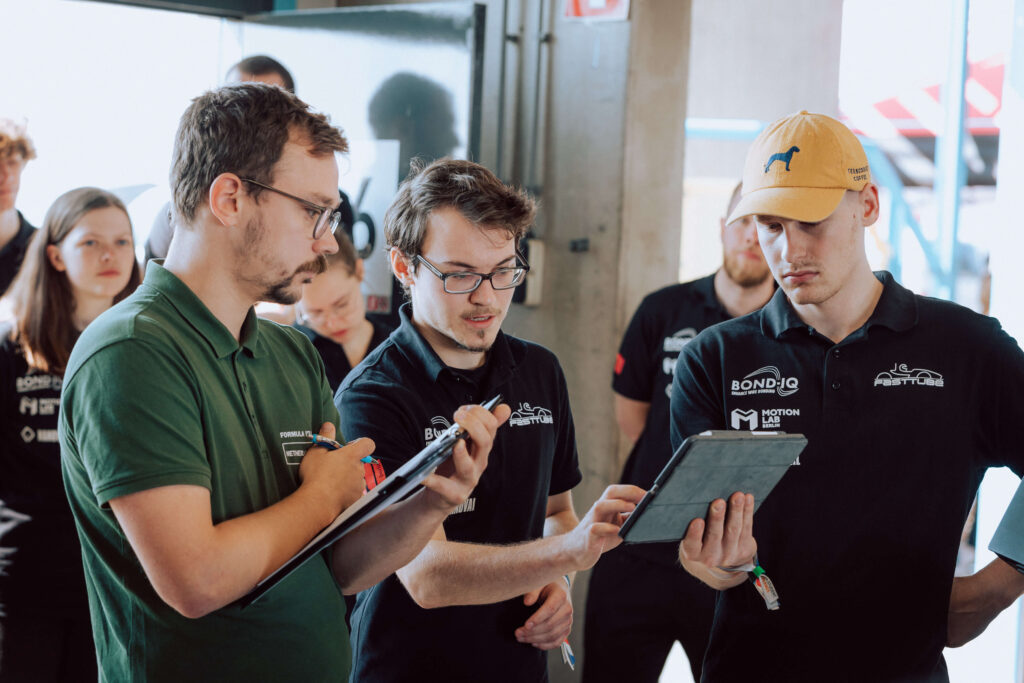
For each event, teams submit a detailed written description of their car ahead of time, explaining their design and how it was applied in building the vehicle. For driverless cars, an additional document describing the autonomous system is required. Based on these submissions, the judges review the technical layout, design approach, and how effectively the concept was implemented in the final build. Afterwards, teams meet the panel in person to answer questions, defend their decisions, and show their depth of understanding. The evaluation considers not only the technical solution itself but also the reasoning behind it.
Since cost plays a central role in product development, this event challenges teams to show a full breakdown of their prototype. They must submit a cost report that includes parts, materials, and the manufacturing steps involved in production. The report is followed by a discussion with the judges, where teams are asked to explain their calculations and show they understand the practical aspects of building the car. The clarity of the report and the students’ grasp of production processes are both taken into account.

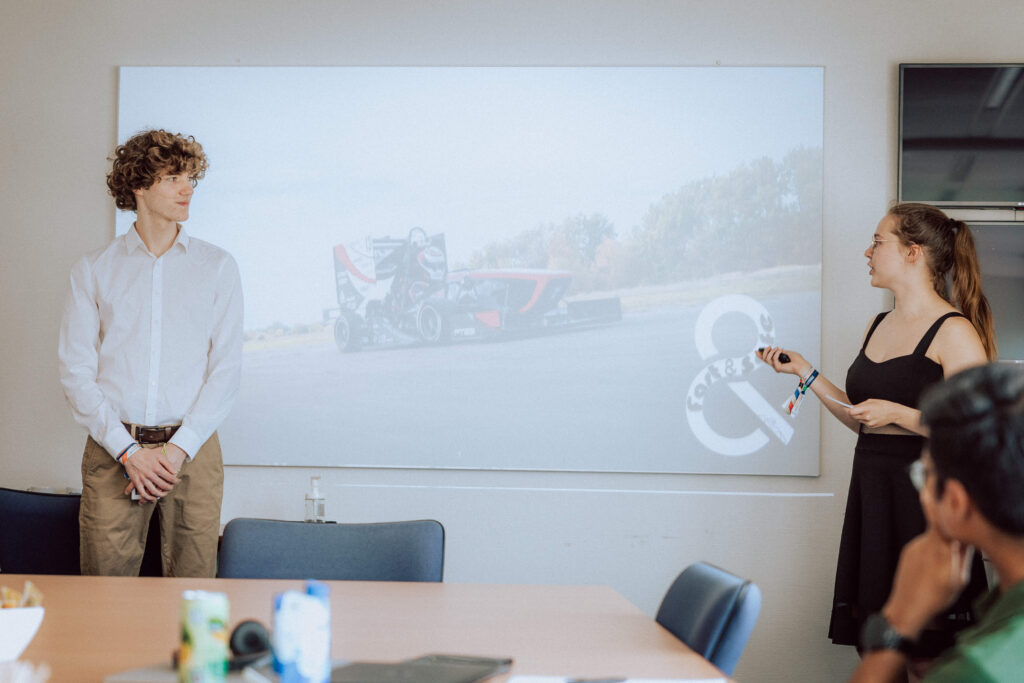
Each team pitches a product or service directly related to the vehicle the team has built in that season as if they were presenting it to potential investors. The goal is to convince the judges—acting as a fictitious company—that their concept meets the needs of a target market and could succeed commercially. The pitch is followed by a question round, where the team must respond confidently and adaptively. Both the content and structure of the presentation, as well as the team’s performance in delivering it, are evaluated.
